Smash-and-grab at lights
Nothing on the seats, nothing in the footwells, phone out of sight at red lights.
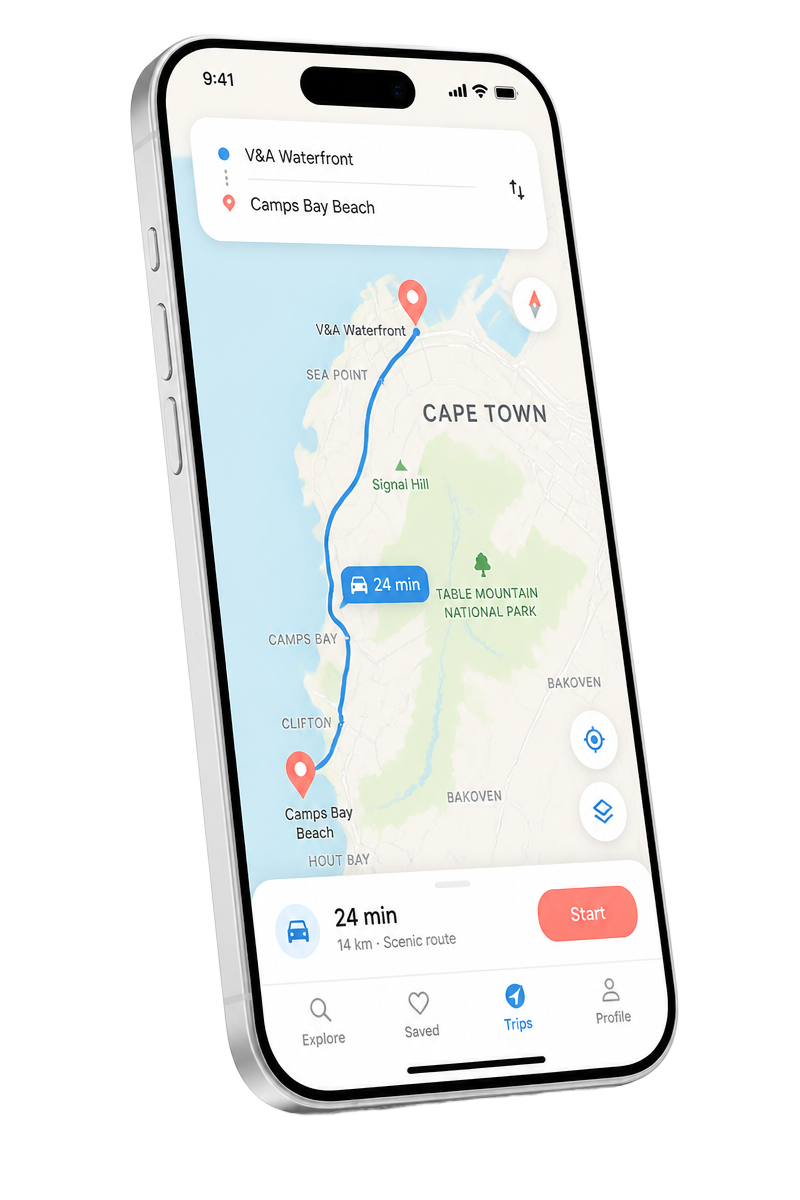
Made by the team behind Clearpath Routes, our own navigation app. Where we mention it, we are recommending our own product.
Yes, for most visitors. Most people drive here for two weeks and the worst thing that happens is a parking argument in Camps Bay. The risks are real but specific, and a few habits remove most of them.
Nothing on the seats, nothing in the footwells, phone out of sight at red lights.
Maiden's Cove, Llandudno, Boulders and Cape Point car parks. Leave the car visibly empty, including the boot.
Four ramps near the airport are named by Cape Town Tourism. Stay on the N2.
More unlit pedestrians and dead traffic lights. Stick to main arterials.
Safety scores for individual routes (Chapman's Peak, the M3, the winelands, the Atlantic Seaboard) live on our sister site capetownsaferoutes.com. For the airport, read driving from Cape Town airport. For after dark, see capetownatnight.com.
FAQ
Yes, for most visitors driving in Cape Town is safe and it is the easiest way to see the area. Roads are well built and signs are in English. The real risks are specific: smash-and-grab at intersections, theft from parked cars at beach car parks, four N2 off-ramps near the airport that Cape Town Tourism flags as high-risk, and unlit roads at night.
Someone breaks a side window of a stopped or slow car at an intersection and takes whatever is visible, usually a phone or bag. It takes a few seconds. Keeping the passenger seat and footwells empty and bags in the boot before you set off prevents almost all of it.
On the main arterials such as the N1, M3 and Victoria Road, generally yes. Avoid the R44 and other farm roads after dark, treat a dead traffic light as a four-way stop, and do not leave the N2 near the airport at the flagged off-ramps.
Full disclosure: Clearpath Routes is our own app. It is a safe-route navigation app for Cape Town, made by the same team as this guide.